Rwanda turns genocide memorials into expanded classrooms for students
Rwanda has launched a new initiative to strengthen genocide education for young people by expanding the educational (…)


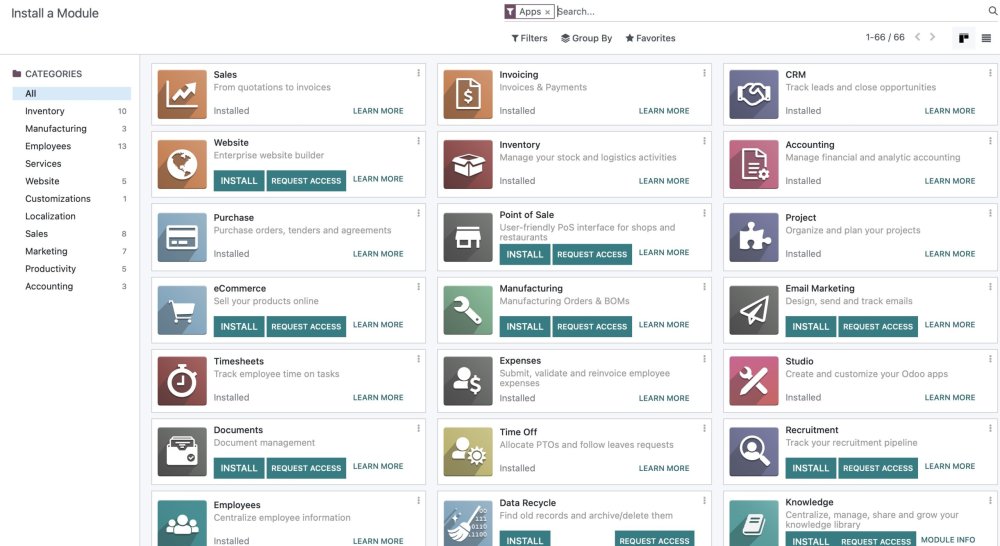
AD Finance, a Kigali-based financial services firm, has launched an enterprise resource planning (ERP) software built on the open-source platform Odoo, aiming to help Rwandan businesses digitize operations ranging from inventory and manufacturing to payroll and financial reporting.
The system, marketed as AD Finance ERP (Odoo), is designed to integrate core business functions into a single platform, reducing reliance on paper-based processes and enabling real-time operational oversight.
Olivier Mugabonake, CEO of AD Finance, said the ERP platform was developed to help Rwandan businesses and financial institutions accelerate digital transformation and reduce paper-based operations. “Our goal is to enable companies to run entirely digital workflows, from procurement to payroll and reporting,” Mugabonake said.
Rwanda has been positioning itself as a regional technology hub, with government policies supporting digital transformation across the private sector. The launch of a locally developed ERP product aligns with broader East African trends, where businesses are increasingly adopting integrated software systems to improve efficiency and attract investment.
“Companies in Rwanda and the broader region are moving fast to modernize,” said Jean Bosco Nkurunziza, tech director of Inner Consult Inc. “ERP systems are no longer a luxury they are becoming essential for businesses seeking growth and compliance.”
AD Finance said the system is intended for companies across sectors, including manufacturing, retail, and services, as well as government-linked entities and NGOs. The software can manage procurement, production tracking, inventory, employee management, and financial reporting.
Mbabazi Helena client of AD Finance, said the system would reduce manual work by automating financial reports and inventory control and enabling online commerce. “Before, we relied heavily on paper,” the client said. “This solution will improve transparency and make operations easier to manage.”
The company also said it provides training to clients’ staff to ensure full adoption and maximize the software’s impact.
The ERP market in Africa is dominated by global providers such as SAP and Microsoft Dynamics, but regional firms are increasingly developing localized solutions that better fit small and medium-sized businesses. Nkurunziza says local products often offer faster implementation and lower costs, but must compete on support and security standards.
“Local ERP providers are gaining traction, but the challenge is building trust,” said Amina Mutesi, a Nairobi-based enterprise software consultant. “Companies want systems that are secure, scalable and compliant with international standards.”
For investors, the adoption of ERP systems is a sign of business maturity and improved corporate governance. Integrated software platforms can also help companies comply with tax and audit requirements, which is a growing priority in Rwanda’s expanding economy.
“ERP adoption is a key indicator of a country’s readiness for higher-value investment,” said Nicolas Dusabe, a regional financial expert. “When companies can generate accurate financial statements and track operations in real time, it reduces risk for lenders and foreign investors.”
AD Finance said more than 40 businesses have already adopted the software since its launch, signaling early demand among Rwandan companies seeking digital transformation.

Rwanda has launched a new initiative to strengthen genocide education for young people by expanding the educational (…)

The University of Rwanda (UR), has launched a four-year international research project aimed at developing a vaccine (…)

The Cabinet has approved the establishment of a national artificial intelligence institute to advance the (…)

The International Monetary Fund (IMF) has approved a $250 million loan for Rwanda under its Extended Credit Facility (…)