University of Rwanda Leads €15.3M Chikungunya Vaccine Project
The University of Rwanda (UR), has launched a four-year international research project aimed at developing a vaccine (…)

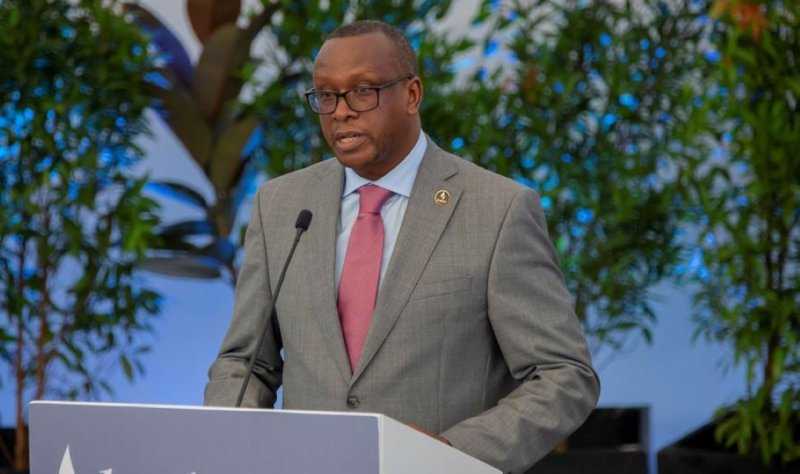
Rwanda continues to strengthen national unity and reconciliation by promoting the traditional value of ubudaheranwa, or forgiveness, a principle that encourages citizens not to be bound by past crimes or conflicts.
Dr. Jean Damascène Bizimana, Minister of Unity and National Dialogue, said the government deliberately introduced ubudaheranwa after the 1994 genocide against the Tutsi to help survivors and perpetrators coexist peacefully.
“Forgiveness does not replace justice, but it allows Rwandans to live together in unity,” Dr. Bizimana said. He stressed that perpetrators must first acknowledge their crimes before seeking forgiveness, creating space for both accountability and healing.
The Gacaca courts, which tried nearly two million genocide suspects, demonstrated the challenge Rwanda faced in delivering justice while rebuilding a fractured society. “It was impossible to imprison millions of people. Forgiveness offered a path to reintegration,” Dr. Bizimana explained.
He added that the value of forgiveness also benefits children born after the genocide. “A child whose parent committed genocide carries inherited trauma. Forgiveness allows them to live without inheriting guilt or being trapped by past violence,” he said.
The principle extends to all affected Rwandans, including survivors, their descendants, and those returning from exile or conflict zones. Ubudaheranwa helps them navigate the psychological wounds of displacement, loss, and family trauma while fostering personal and national growth.
Uwizeye Jean de Dieu, a unity and reconciliation advocate, noted that failure to embrace forgiveness often stems from lingering trauma and extremist ideologies, which can perpetuate cycles of violence or fear among future generations.
“Forgiveness is not forgetting,” Uwizeye said. “It is a path to healing, coexistence, and ensuring Rwanda’s history does not define its future.”
Through justice, reconciliation, and forgiveness, Rwanda is forging a society where past atrocities no longer dictate the destiny of its people.
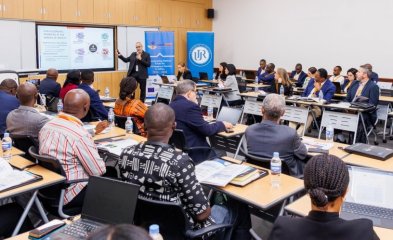
The University of Rwanda (UR), has launched a four-year international research project aimed at developing a vaccine (…)

The Cabinet has approved the establishment of a national artificial intelligence institute to advance the (…)
The International Monetary Fund (IMF) has approved a $250 million loan for Rwanda under its Extended Credit Facility (…)
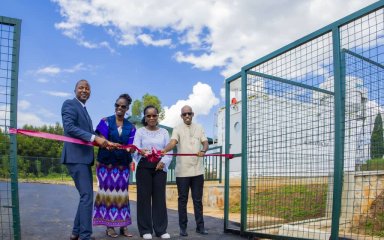
Rwanda on Thursday inaugurated its first Automatic Upper-Air Station, a facility designed to strengthen the (…)