MINAGRI announces dates for 19th Agriculture and Livestock Exhibition
Ministry of Agriculture and Animal Resources (MINAGRI) has announced that the 19th Agriculture and Livestock (…)

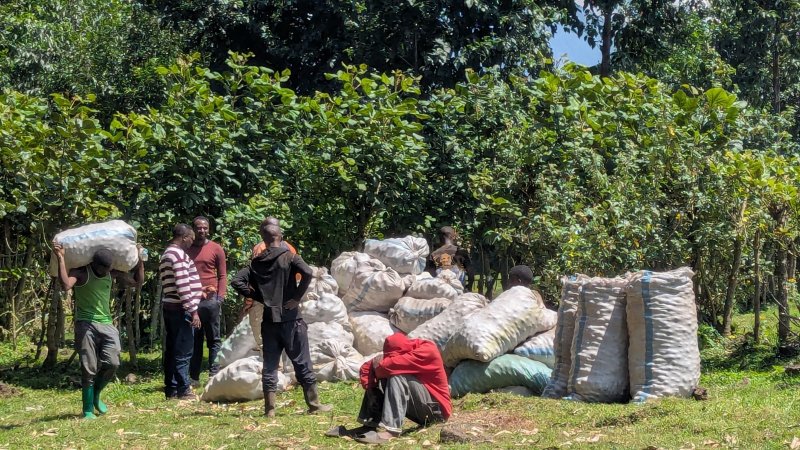
For decades, Rwanda’s Irish potato market has been dominated by a network of brokers and middlemen locally known as ’abamamyi’ — a term often used to describe individuals who profit from the hard work of farmers without directly contributing to production.
Operating largely from urban centers, particularly Kigali, these traders have traditionally positioned themselves between farmers and consumers, buying potatoes at low prices from producers and reselling them at significantly higher prices in city markets.
While middlemen play an important role in moving produce from farms to consumers, their influence over pricing has often attracted criticism from farmers, policymakers, and consumers alike. They have frequently been accused of contributing to food inflation, market distortions, artificial shortages, and hoarding, particularly in Rwanda’s Irish potato sector, one of the country’s most important staple food markets.
The problem has persisted despite increasing agricultural productivity.
Farmers have often lacked access to reliable market information, transportation, and direct links to buyers. As a result, many have been forced to accept whatever price brokers offer at harvest time, especially when immediate cash needs leave them with little bargaining power.
Today, however, a new digital marketplace and potato grading technology developed by Murika Farms is beginning to change that equation.
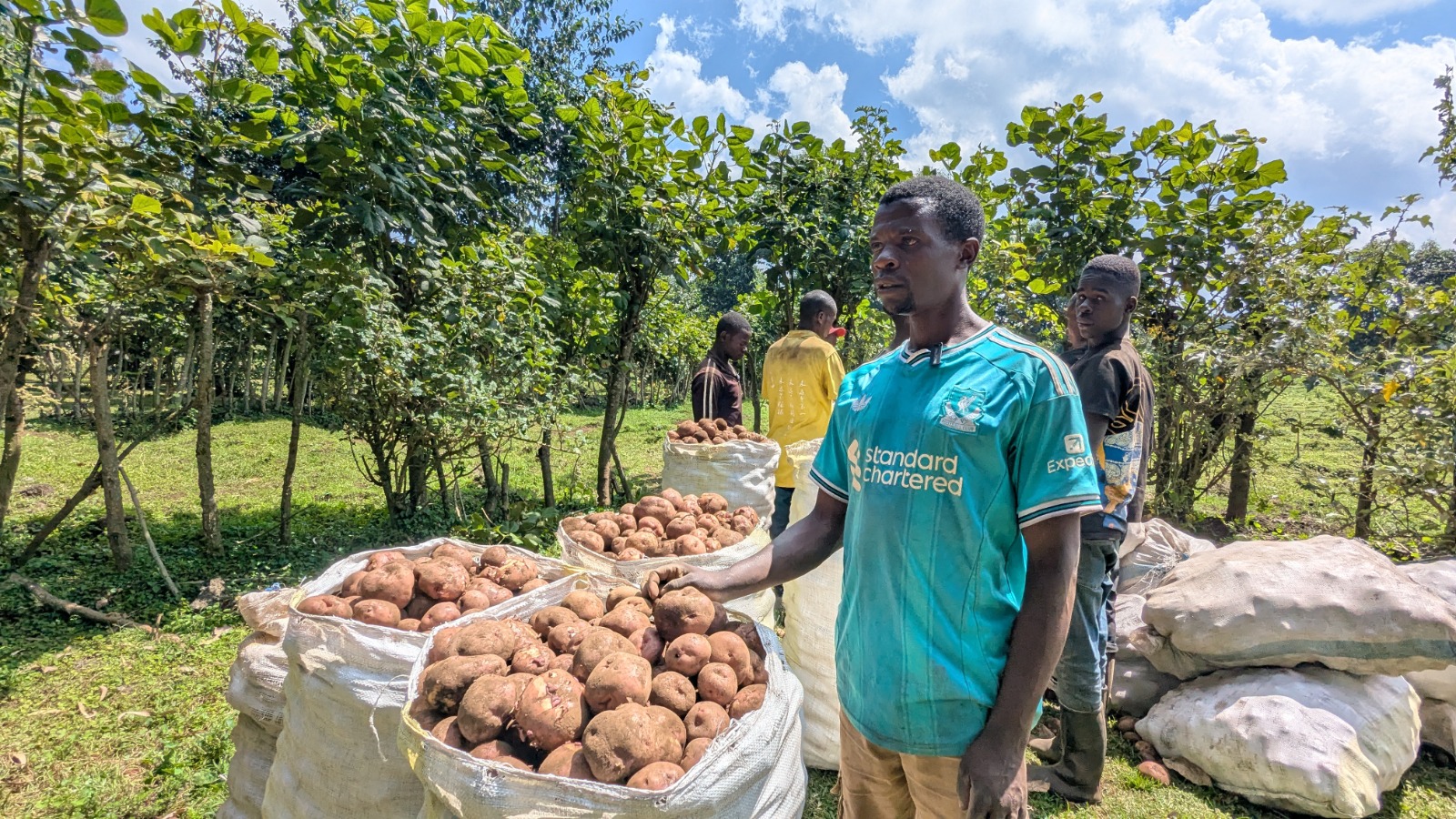
The innovation is helping farmers understand the true value of their produce, connect directly with buyers, and receive fair compensation based on the quality of their harvests.
Tackling a Long-Standing Market Challenge:
Food inflation remains a concern in Rwanda, where Irish potatoes are among the most consumed staple foods alongside beans, maize, cassava, and bananas.
Price fluctuations in potatoes often have a direct impact on household food expenditure, particularly for urban consumers.
Agriculture experts note that one of the major causes of price instability is the lack of transparency in agricultural markets. Farmers frequently sell their produce without knowing prevailing market prices, while buyers often struggle to verify product quality before purchase.
This information gap creates opportunities for speculative trading and excessive mark-ups along the value chain.
According to farmers using the Murika platform, the new system is helping eliminate many of these inefficiencies.
Murika Farms has introduced potato grading machines that classify potatoes according to recognized quality standards before they enter the market. The technology allows both farmers and buyers to know exactly what is being traded and at what value.
The company has also developed the Murika App, a digital marketplace that directly links farmers with buyers.
Through the platform, farmers can register, access real-time market information, view prevailing prices, and list their produce for sale.
When uploading products, farmers provide information on quantity, location, and product type. Potatoes are then assessed using Murika’s grading system and categorized according to approved quality standards.
Buyers viewing products on the platform can see verified quality grades, available quantities, pricing, and information about the farmer.
The result is greater transparency, reduced disputes, and increased trust between producers and buyers.
Direct Access to Markets:
Once buyers select products, orders are placed and payments are made electronically through the platform.
An additional 8.5 percent service fee is charged on transactions, supporting Murika Farms’ operations and future expansion.
Buyers receive Electronic Billing Machine (EBM) invoices automatically, while farmers receive notifications confirming that their produce has been sold and paid for.
The platform also provides logistics support, with delivery services available when requested.
According to Saad Byiringiro, Tech Lead at Murika Farms, the service fee remains significantly lower than the margins often earned by traditional brokers.

"This percentage is small compared to what many middlemen earn from farmers’ produce, yet they often contribute very little value to the transaction," Byiringiro said.
He says the platform was designed to create a fairer market ecosystem where both farmers and buyers benefit.
Locally Built Innovation:
According to Janvier Ahimanishyize, an IFC consultant at Rwanda Agricultural Board (RAB), the potato grading machine used by Murika Farms was assembled locally as a prototype and is expected to transform the Irish potato business in Rwanda.
The machine objectively determines potato grades, helping eliminate disputes that have traditionally emerged during price negotiations.
"The grading technology reduces conflicts between farmers and buyers because the quality is determined before the product enters the market," Ahimanishyize said.
Though still in the pilot phase, he noted that the machine has already been certified by the Rwanda Agriculture and Animal Resources Development Board (RAB) and is expected to be rolled out more widely following positive results.
Farmers See Results:
For Augustine Maniriho, a potato farmer from Kinigi Sector in Musanze District, the changes have been noticeable.
For nearly a decade, he relied on middlemen to sell his harvests.
That changed six months ago when he joined the Murika platform.
"The risk of being cheated on prices is much higher when dealing with middlemen who buy in bulk but determine prices according to what suits them," Maniriho said.
Today, he sells Grade A potatoes at Rwf802 per kilogram, Grade B at Rwf708, and Grade C at Rwf605.
The improvement in pricing has significantly increased his earnings.
"My profits have increased from about Rwf600,000 to Rwf900,000 per season," he said.
Like many farmers working with Murika Farms, Maniriho sells his higher-grade potatoes through the platform while retaining lower-grade produce for household consumption or seed for future planting seasons.
"We sell the top grades and use the remaining smaller potatoes either as seed or for food," he explained.
Farmer Digital Inclusion:
Beyond market access, Murika Farms has invested heavily in farmer training and digital inclusion.
More than 700 farmers have already received training on technology adoption and digital marketplace participation, with women and girls accounting for 57 percent of beneficiaries.
The company has also upgraded the Murika App to Version 2, integrating Kinyarwanda language support and offline functionality to improve accessibility among rural farmers.
Through funding support of Rwf134 million from the Innovation Challenge Fund (ICF) supported by the Commercialization and De-Risking for Agricultural Transformation (CDAT) project, Murika Farms has acquired potato grading equipment, trained farmers, distributed 30 smartphones to women farmers, and enhanced its digital infrastructure.
The investment has enabled rapid growth.
Since receiving funding in August 2025, Murika Farms has expanded from serving just over 50 farmers to reaching more than 60,000 farmers. The platform now records over 10,000 daily users, has graded more than 420 tonnes of potatoes, and facilitated transactions worth over Rwf232 million.
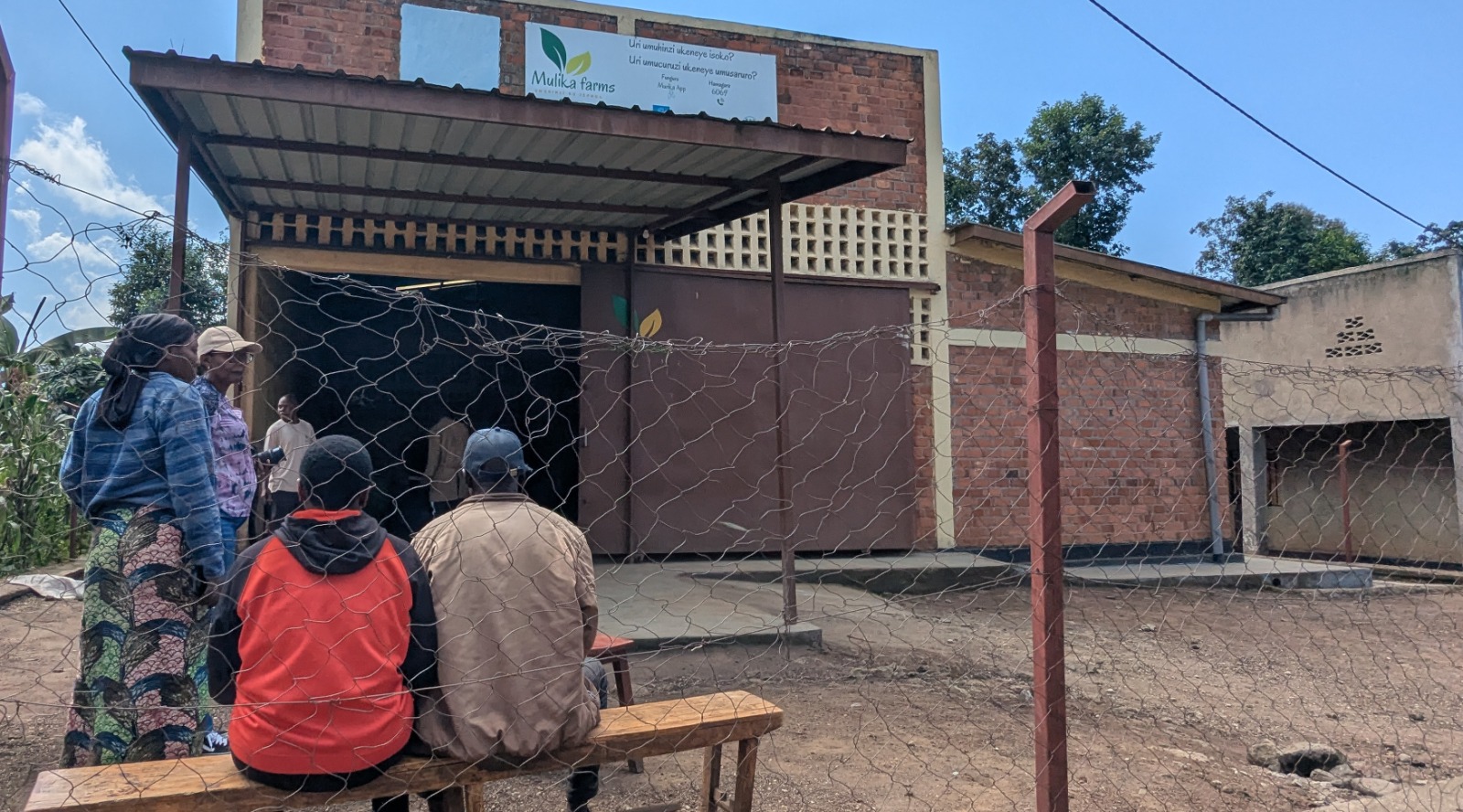
Payments are transferred to farmers through mobile money within 24 hours after successful sales.
Building a More Efficient Food System:
As Rwanda continues efforts to modernize agriculture and strengthen food security, innovations such as Murika Farms’ grading and e-commerce platform demonstrate how technology can address longstanding inefficiencies in agricultural markets.
By reducing information asymmetry, improving price transparency, and connecting farmers directly with buyers, the system is helping producers capture more value from their harvests while potentially contributing to more stable food prices for consumers.
The innovation has already created 45 jobs and its developers have ambitious plans for expansion.
Between 2026 and 2028, Murika Farms aims to reach 20,000 active farmers, facilitate more than $1 million in transactions, expand into additional districts, and introduce more crops and livestock products onto the platform.
Once fully rolled out, this innovation could become an important tool in reducing the influence ationlof exploitative middlemen, increasing farmer incomes, and creating a more transparent and resilient food value chain in Rwanda.
By: Daniel Sabiiti
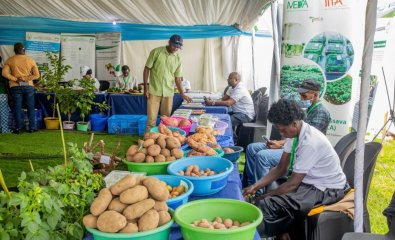
Ministry of Agriculture and Animal Resources (MINAGRI) has announced that the 19th Agriculture and Livestock (…)

The Ministry of National Unity and Civic Engagement (MINUBUMWE) says it is updating its strategy to prevent and (…)
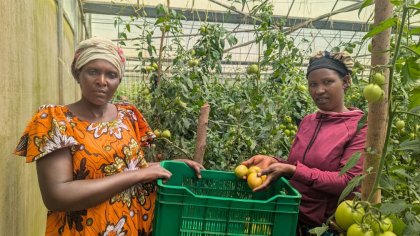
Rwanda loses an estimated 150,000 tons of agricultural produce annually which is equivalent to nearly 30 percent of (…)

Awareness of autism is growing in Rwanda as health and education officials call for earlier identification, improved (…)