Rwanda launches $6.7 million effort to restore Nyungwe national park
Rwanda plans to spend about 9.8 billion Rwandan francs ($6.7 million) to restore sections of Nyungwe National Park (…)

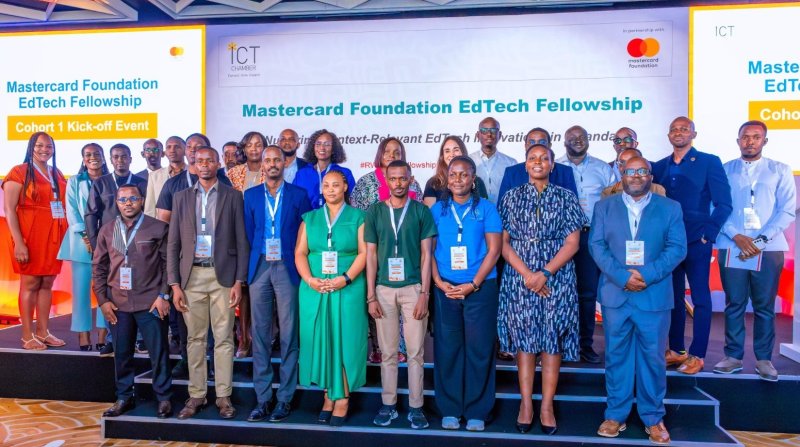
More than 40,000 students, teachers and other education stakeholders in Rwanda are expected to be trained in digital skills over the next 18 months under a new education technology initiative aimed at expanding access to ICT in education.
The program was officially launched Thursday by the ICT Chamber under the Private Sector Federation during the rollout of the first phase of the Mastercard Foundation EdTech Fellowship. Eight companies were selected to participate in the initiative, which seeks to strengthen digital learning across the country.
The fellowship is designed to support organizations already engaged in digital education and training by helping them scale their services and reach more learners nationwide, while improving the quality of technology-enabled education.
More than 200 companies applied for the program, with eight selected based on their experience in delivering digital skills training and supporting education through technology.
ICT Chamber chief executive officer Alex Ntale said the selected companies were already active in the sector and positioned to expand their impact.
“We selected those eight companies because they are already active, they are working and training people,” Ntale said. “We are confident that within 6 to 18 months of the pilot phase, at least 40,000 learners will have been reached.”
He said the companies will receive financial support, mentorship and technical assistance, as well as support in connecting with schools and other institutions.
Jobra founder Uwizeyimana Vivens said one of the key challenges digital education providers face is access to learners.
“One of the biggest benefits we expect is easier access to learners,” he said. “It will also help us work with schools more easily and reach more people in a short time.”
Edtech Solution Training Center chief executive Hirwa Aurore said the program will help expand access beyond urban areas.
“We will be able to reach people outside Kigali, those in rural areas, refugee camps and people with disabilities,” he said.
The program will be implemented by the ICT Chamber in partnership with the Mastercard Foundation and international universities, which will support curriculum development and quality assurance.
State Minister for Education Claudette Irere said technology remains central to Rwanda’s education transformation agenda.

“As Rwanda continues to develop education, technology remains a key pillar,” she said. “This will help us achieve our goals.”
The Ministry of Education said it will continue to support the initiative through policy guidance where necessary.
The program aligns with Rwanda’s Vision 2050 strategy, which aims to build a knowledge-based economy and expand basic digital literacy nationwide by 2035.

Rwanda plans to spend about 9.8 billion Rwandan francs ($6.7 million) to restore sections of Nyungwe National Park (…)
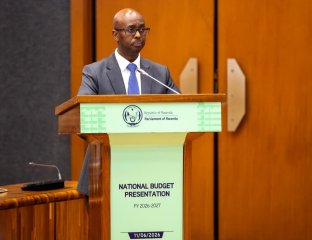
Rwanda has set its national budget for the 2026-27 fiscal year at 7.796 trillion Rwandan francs ($5.5 billion), (…)

The Capital Markets Youth Forum 2026 concluded Friday at the Kigali Convention Centre, bringing together students, (…)

China’s Ambassador to Rwanda, Gao Wenqi, on Wednesday met with the Speaker of the Chamber of Deputies, Gertrude (…)