President Kagame Attends Nuclear Energy Summit in Paris
President Paul Kagame attended the second Nuclear Energy Summit in Paris, joining leaders from around the world, (…)

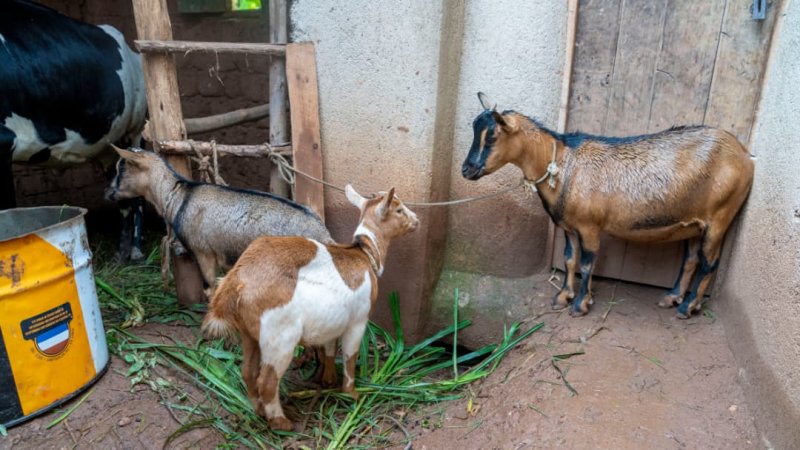
Success stories emerging from the implementation of the Partnership for Resilient and Inclusive Small Livestock Markets (PRISM) project are helping districts improve nutrition, raise household incomes, and reduce poverty, beneficiaries say.
As the project approaches the end of its first phase, Ruhango District Vice Mayor for Economic Affairs, Jean Marie Vianney Rusiribana, says lessons learned during implementation will help communities sustain and expand the gains made so far.
The seven-year PRISM project (2019–2026), valued at $28 million, is jointly funded by the International Fund for Agricultural Development (IFAD), Enabel, Heifer International, VSF Belgium, and the Government of Rwanda.
The project aims to reduce poverty and improve food security by strengthening small livestock value chains across 15 districts in the Northern, Southern and Western provinces, targeting rural men, women and youth engaged in livestock markets.
Changing Lives, One Household at a Time
In the remote hills of Kabagari Sector, beneficiary families are witnessing significant improvements in their incomes and livelihoods through the PRISM model of “starting small and growing bigger.”
Esther Mukamurigo, one of the 30 members of the Twuzuzanye Cyunyu Group, recalls how difficult life was before the project.
Despite her youthful appearance and determination, Mukamurigo says she relied on casual labour just to survive.
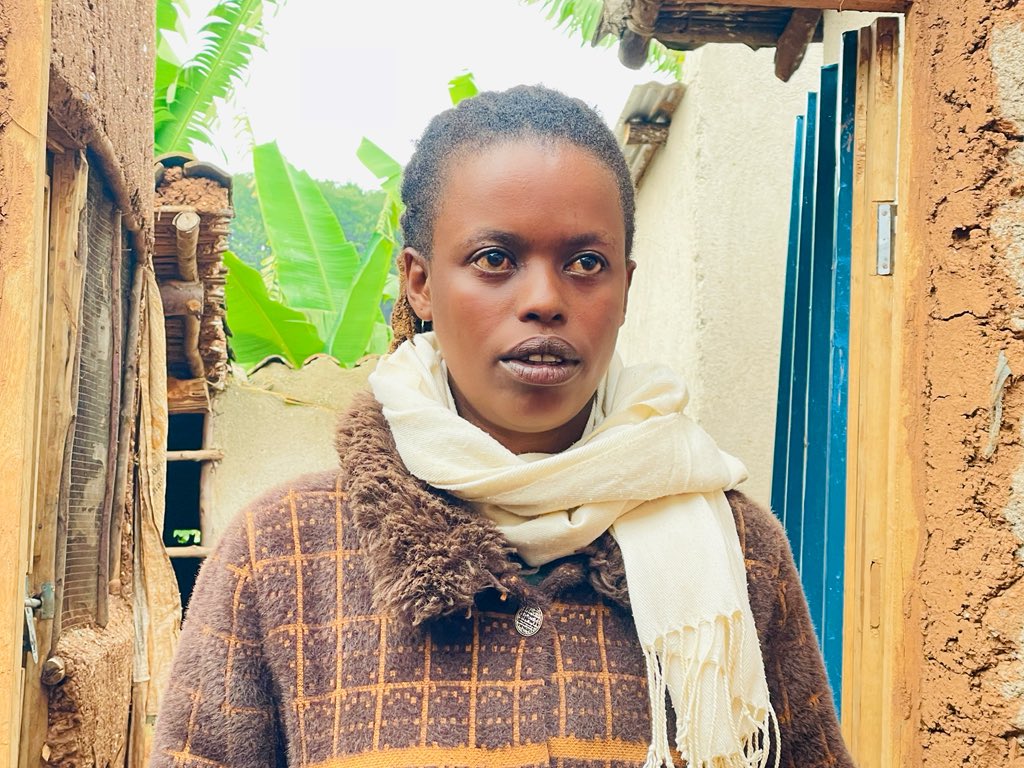
“Most of the time I depended on casual labour for daily wages just to find money to eat and survive,” she said during a media visit to document PRISM success stories that began this Monday.
Her situation began to change when PRISM supported members of her group with 10 chickens each.
Mukamurigo carefully raised the birds and soon started collecting eggs. During her first harvest, she collected about 500 eggs, which she used to expand her poultry activities.
From the initial birds, she grew her stock to 100 chicks, generating an income of about Rwf250,000. Today, her poultry business has expanded to 600 chickens, and she has also invested in six goats using the proceeds.
For her family, the growth has brought stability and new hope.
“As my income increased, my family began to have enough food at home. Eggs and other foods are now more available, and cases of malnutrition in the community have reduced,” Mukamurigo said.
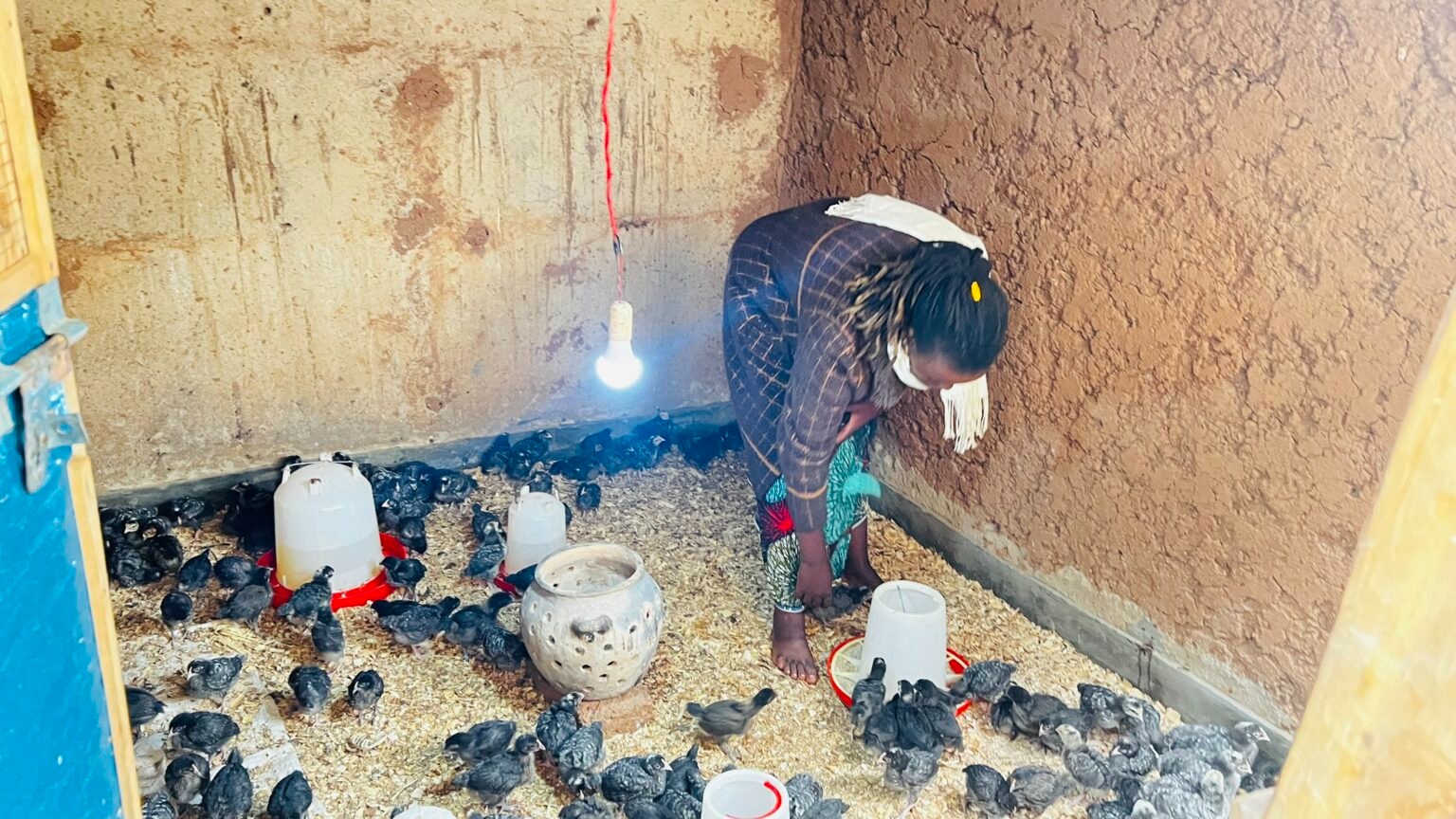
With support from PRISM, she now dreams of expanding her poultry business to 25,000 chickens within the next five years.
Skills and Innovation in Livestock Farming
Beyond providing livestock, the PRISM project equips beneficiaries with specialised training in modern farming, financial management, and innovative animal feed production techniques.
Farmers are trained to produce affordable animal feed using innovations such as azolla farming and hydroponic fodder technology.
These methods help farmers reduce the high cost of feeding animals while improving productivity in a livestock sector that often struggles with limited access to affordable feeds.
The knowledge and confidence gained from PRISM training encouraged Mukamurigo to keep expanding her business.
The project also supported farmers to organize into savings groups, allowing members to access small loans to invest in their enterprises.
Mukamurigo joined one of these savings groups and obtained a loan that helped her build a larger poultry house.
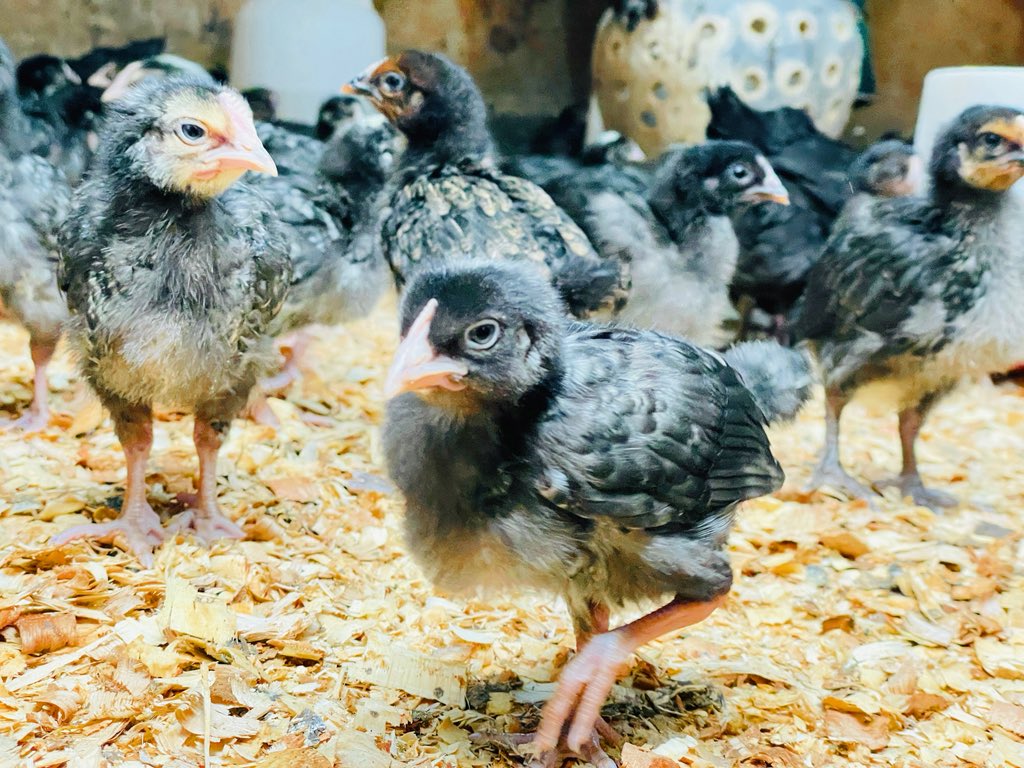
“Now my poultry house has the capacity to raise 600 chickens,” she explained.
Encouraged by the profitability of the venture, she and her husband are planning the next step.
“After seeing the profit from chicken farming, we are planning to build a new poultry house that will accommodate up to 2,500 chickens.”
Beyond income generation, the project has also improved the family’s nutrition and quality of life.
“We thank the PRISM project for lifting us from poverty,” she said. “Now we can eat eggs every day, and we are able to drink milk.”
Inspired by PRISM’s “Passing on the Gift” principle, Mukamurigo has also supported other families in her community.
“I helped one of my neighbours start raising chickens as well. Now their family can also eat eggs every day and access a balanced diet,” she said.
Building Sustainable Farmer Groups
Jeanette Mujawayezu, president of the Terimbere Mworozi Rwoga group, says collective action has been key to sustaining the benefits of the project.
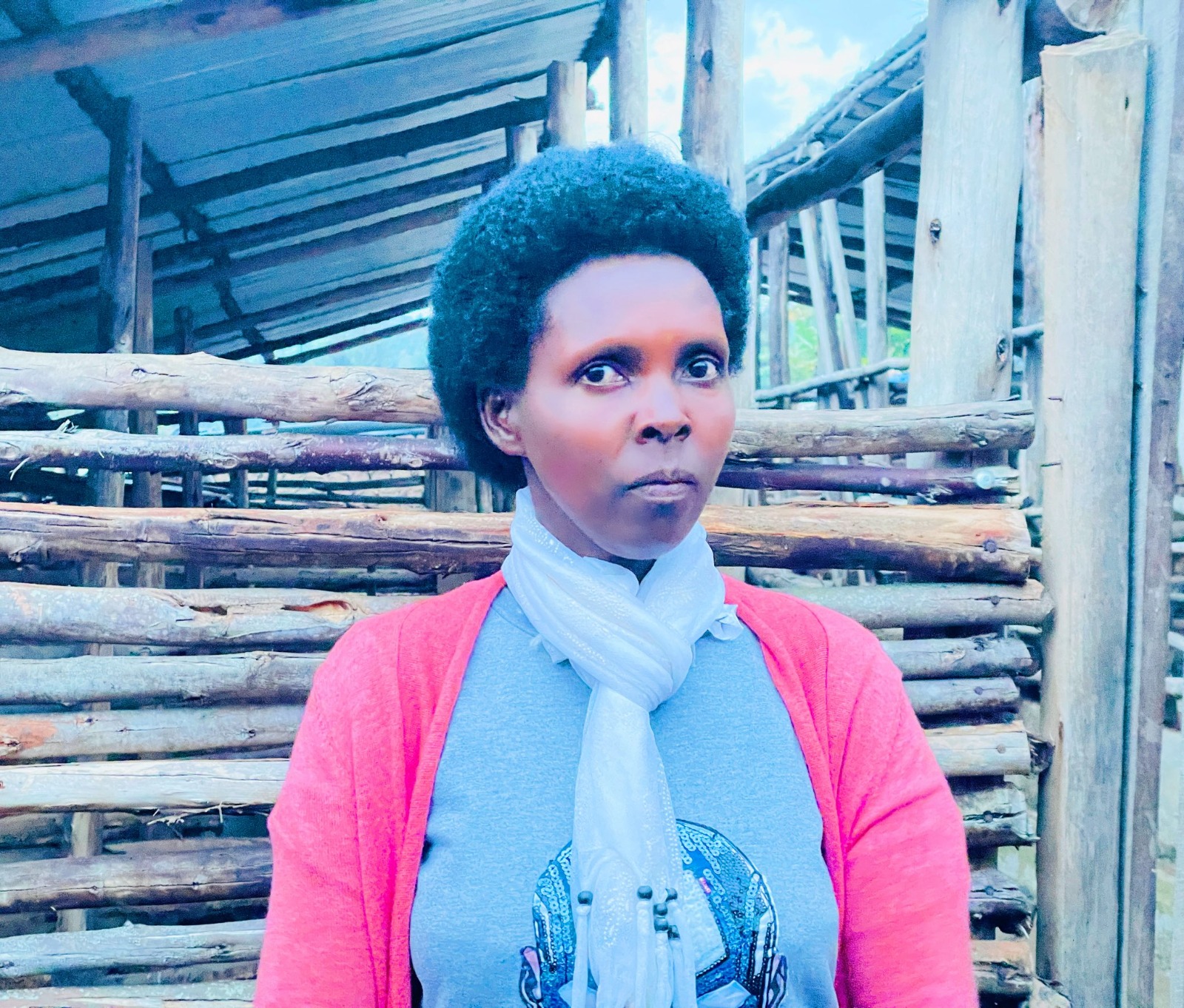
“Working together has helped us plan better and think about bigger projects,” she said. “We first worked in six small groups, but later decided to unite into one strong group so we could support each other and save more money.”
Through their savings and teamwork, the group launched a pig farming project in 2025 with 12 pigs. As the pigs reproduced and some piglets were sold, the group began generating income.
Today, the group has saved Rwf820,000, which they are reinvesting to expand their livestock activities.
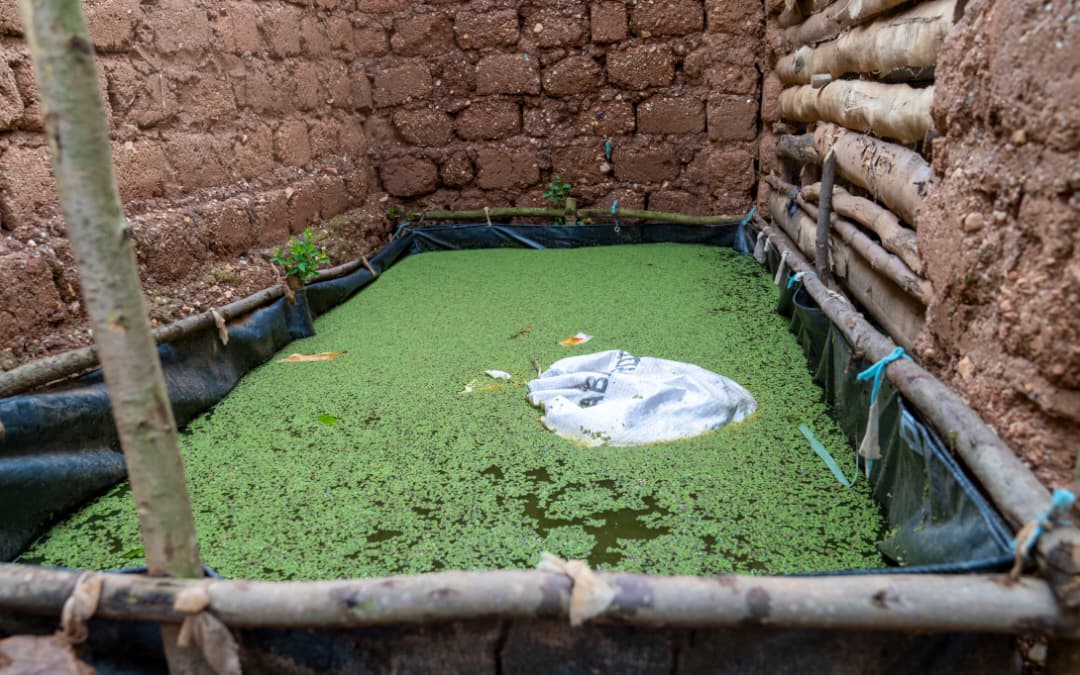
Although farmers still face challenges accessing affordable animal feed, Mujawayezu says the introduction of azolla and hydroponic fodder technology is helping reduce feeding costs.
Local Impact and Future Prospects
In Kabagari Sector alone, PRISM has supported 126 farmers to strengthen their livelihoods and move out of poverty.
According to Vice Mayor Rusiribana, the project has also contributed to improvements in key development indicators across the district.
“In the past five years, stunting levels in Ruhango have reduced from 39 percent to 22 percent,” he said, attributing the progress partly to improved access to livestock products and markets.
The district has also invested in infrastructure to support the livestock value chain, including completing a livestock market that had previously stalled, establishing a veterinary clinic, and building a modern slaughterhouse.
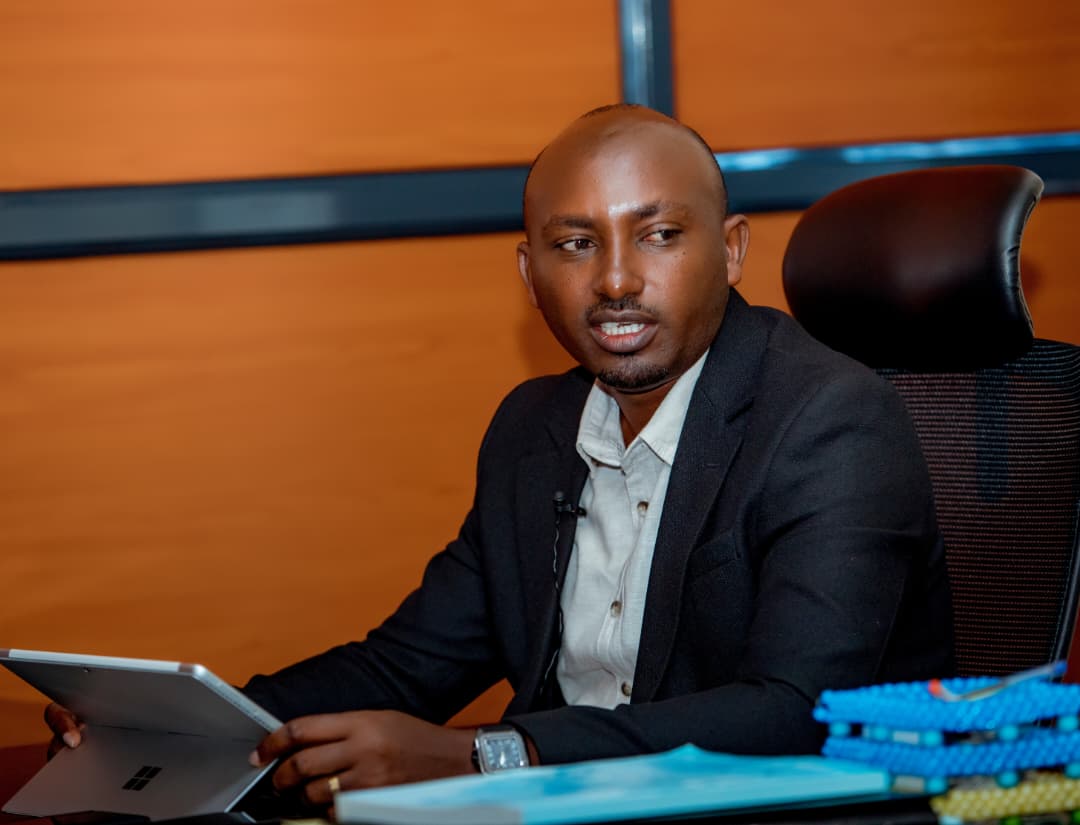
“We need to sustain these successes so that as we move into the second phase of PRISM, we can further reduce stunting and lift the remaining 8,000 citizens out of poverty,” Rusiribana said.
He added that the skills farmers gained through PRISM will also support the government’s Food Basket Sites (FOBASI) initiative, a national programme launching in the 2026A agricultural season aimed at boosting agricultural productivity by 50 percent within four years.
However, Rusiribana acknowledged that more work is needed to expand livestock infrastructure and address persistent challenges such as limited access to electricity and affordable animal feed.

President Paul Kagame attended the second Nuclear Energy Summit in Paris, joining leaders from around the world, (…)
Rwanda’s “I Am Rwandan” (Ndi Umunyarwanda) program is showing early success in changing the mindset of young people (…)
Rwanda has begun administering a new vaccine, Gardasil 9, to protect against human papillomavirus (HPV), a virus (…)
Universities and higher education institutions across the East African Community (EAC) have committed to working (…)