University of Rwanda Leads €15.3M Chikungunya Vaccine Project
The University of Rwanda (UR), has launched a four-year international research project aimed at developing a vaccine (…)

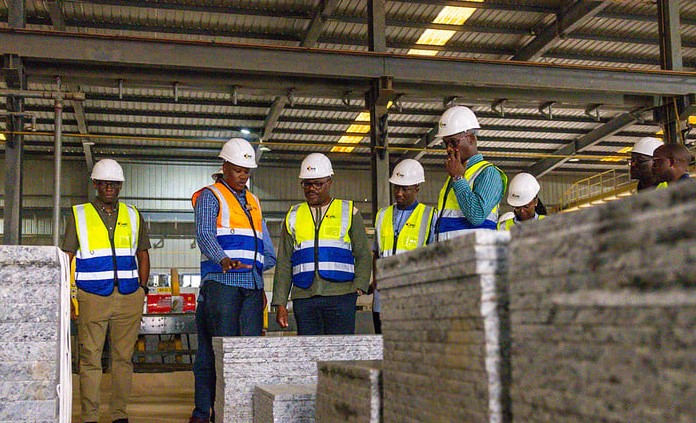
The management of East African Granite Industries (EAGI), a leading tile manufacturer in Nyagatare District, announced plans to increase production and reduce prices to better compete in Rwanda’s construction materials market.
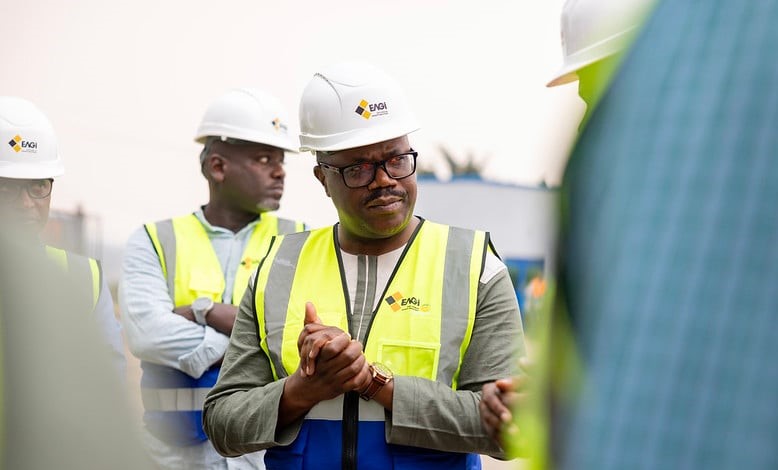
During a visit Friday, Aug. 8, 2025, Prime Minister Dr. Justin Nsengiyumva was briefed on the factory’s operations and capacity. Currently, EAGI produces about 480 square meters of tiles daily, which is just 48% of its 930-square-meter potential. The factory aims to increase production to nearly 1,945 square meters per day by the first quarter of 2026.
Francis Kweli, EAGI’s managing director, said the company plans to finish the year operating at 90% capacity of its current maximum. “We expect to reach 90% of 930 square meters before the year ends, and then increase to 1,945 square meters in the first quarter of next year,” he said.
Kweli also outlined plans to innovate by reducing the thickness and weight of tiles from 20 millimeters to 12 millimeters. “Builders were hesitant to use our tiles in high-rise buildings due to their heavy weight. Reducing weight will lower costs and make our products more attractive to customers,” he said.
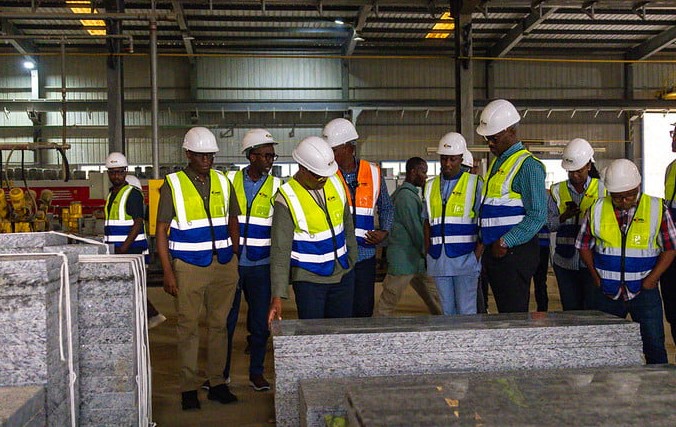
The factory employs 100 workers, including 96 permanent staff. About 10% of the workforce is involved in mining, while 40% perform tasks such as stone cutting and painting.
Prime Minister Nsengiyumva encouraged the factory to resolve ongoing challenges with electricity supply and machinery maintenance to reach full production capacity. “Make full use of the resources you have, operate at 100%, then look for further improvements,” he said. “It would be a problem to have equipment but not utilize it fully while competitors enter the market.”
Founded in 2012, EAGI was Rwanda’s first local tile manufacturer, helping reduce dependence on expensive imports from Tanzania and Kenya. The factory was officially inaugurated by President Paul Kagame on July 6, 2012.
At the inauguration, Kagame urged workers to adopt shift systems and operate around the clock to meet growing demand. “The market has expanded, and both operations and mindset must evolve,” he said.

The University of Rwanda (UR), has launched a four-year international research project aimed at developing a vaccine (…)

The Cabinet has approved the establishment of a national artificial intelligence institute to advance the (…)
The International Monetary Fund (IMF) has approved a $250 million loan for Rwanda under its Extended Credit Facility (…)
Rwanda on Thursday inaugurated its first Automatic Upper-Air Station, a facility designed to strengthen the (…)