Rwanda launches $6.7 million effort to restore Nyungwe national park
Rwanda plans to spend about 9.8 billion Rwandan francs ($6.7 million) to restore sections of Nyungwe National Park (…)

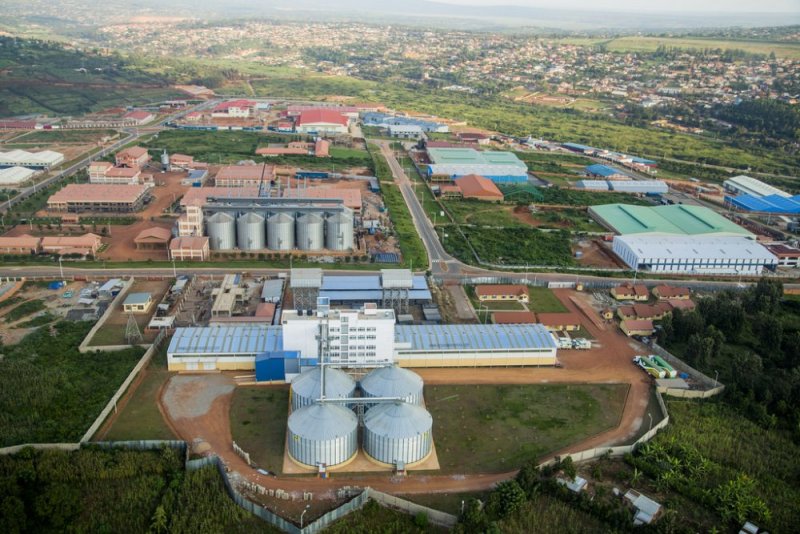
Rwanda’s industrial output grew 8.2% year-on-year in December 2025, driven largely by gains in electricity generation and beverage manufacturing, the National Institute of Statistics of Rwanda (NISR) said in its Index of Industrial Production released on Feb. 4.
The NISR report showed the industrial sector’s average growth for 2025 at 6.5%, reflecting continued expansion across energy, manufacturing and mining. The energy sector recorded the strongest performance, with electricity generation up 13.3%, while water and waste management activities increased 8%.
Manufacturing output rose 5.5%, supported by a 9.7% jump in beverages and tobacco production and a 9% rise in textiles, clothing and leather goods. Mining and quarrying also expanded, growing 4.8%.
However, the data showed pockets of weakness. Food processing declined 2%, and manufacturing of metal products, machinery and equipment fell 1.2%, indicating that industrial growth remains uneven and vulnerable to supply-chain constraints.
“Rwanda’s industrial growth is becoming more diversified, but the sector still needs more capacity in financing and logistics to sustain momentum,” said Amos Butera, senior business analyst at Inner Consult Inc. in an interview with Vision Media. “The energy gains are positive, but industrial policy must support downstream value addition if growth is to broaden.”
Butera noted that for investors the figures reinforce Rwanda’s push to build a stronger manufacturing base and reduce reliance on imports. Improved energy output can lower operating costs for factories and support export-focused production. The growth in beverages and textiles also supports Kigali’s strategy to expand value-added manufacturing.
Yet the decline in food processing and machinery production highlights ongoing challenges. The key question for policymakers is whether Rwanda can sustain industrial momentum by addressing bottlenecks in logistics, financing and domestic demand.

Rwanda plans to spend about 9.8 billion Rwandan francs ($6.7 million) to restore sections of Nyungwe National Park (…)

More than 40,000 students, teachers and other education stakeholders in Rwanda are expected to be trained in digital (…)
Rwanda has set its national budget for the 2026-27 fiscal year at 7.796 trillion Rwandan francs ($5.5 billion), (…)

The Capital Markets Youth Forum 2026 concluded Friday at the Kigali Convention Centre, bringing together students, (…)