Rwanda launches first upper-air weather monitoring station
Rwanda on Thursday inaugurated its first Automatic Upper-Air Station, a facility designed to strengthen the (…)

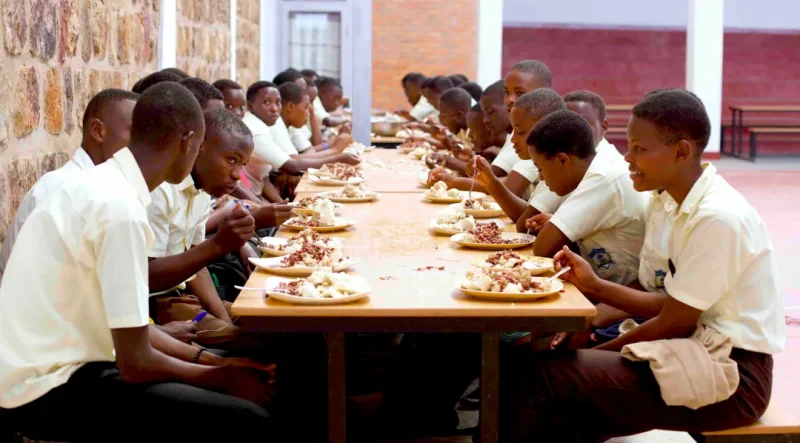
Rwanda has increased funding for its nationwide school feeding program, reinforcing a policy that provides meals to all students in public and government-subsidized schools as enrollment continues to represent roughly one-third of the country’s population.
Data from the Ministry of Education Rwanda shows that in 2025 the country had 5,041 schools serving 4,766,125 students — about 35% of the population. The system includes 4,264 pre-primary schools, 4,108 primary schools, 1,916 lower secondary schools, 981 upper secondary schools offering both cycles, 581 technical and vocational institutions and 120 international schools.
All students receive meals at school. Day students are served lunch, while boarding students in secondary schools receive full-day meals.
Under updated 2025 operational guidelines published in January 2026, government contributions per student have increased. Primary school allocations rose to 219 Rwandan francs (about 16 cents) per child per day, up from 135 francs. Day secondary students now receive 642 francs per day, a sharp rise from 56 francs. Preschool students receive 109 francs daily, according to information obtained by local media.
For the 2025/2026 fiscal year, the government allocated more than 130 billion francs (about $95 million) to the feeding program.
Parents continue to contribute a portion of the cost. Families with children in primary school pay 15 francs per day, or 975 francs per term. Parents of day secondary students contribute 19,500 francs per term, though those unable to pay may provide manual labor at schools instead.
The guidelines require meals to include a balanced diet of cereals or tubers, vegetables, fruits, oils and animal protein, with standardized portions by age group.
Officials say funding increases reflect rising food prices. Urban inflation reached 8.9% in January 2026 compared with the previous year. Authorities credit the feeding program with improving attendance and reducing dropout rates, currently at 5.2%, with a target of lowering it to 4.8% this academic year.
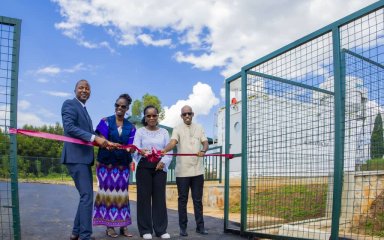
Rwanda on Thursday inaugurated its first Automatic Upper-Air Station, a facility designed to strengthen the (…)

Rwanda Development Board (RDB) has temporarily suspended operations at four hotels after inspections found they (…)
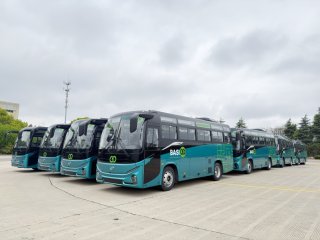
Electric bus company BasiGo plans to introduce 18 new electric passenger buses in Rwanda as part of efforts to (…)

Minister of Foreign Affairs and International Cooperation, Olivier Nduhungirehe, met South Korean President Lee Jae (…)