Rwanda launches $6.7 million effort to restore Nyungwe national park
Rwanda plans to spend about 9.8 billion Rwandan francs ($6.7 million) to restore sections of Nyungwe National Park (…)

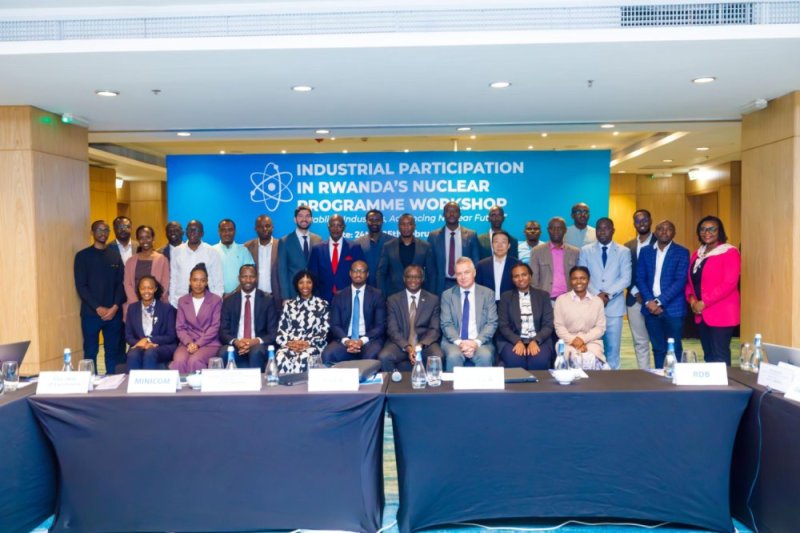
Rwanda plans to invest more than $5 billion in a nuclear power plant aimed at increasing electricity access across the country, officials said.
Dr. Fidel Ndahayo, director general of the Rwanda Atomic Energy Board (RAEB), made the announcement Feb. 24 during a meeting co-hosted by RAEB, the Ministry of Trade and Industry, and the United Nations Economic Commission for Africa.
“The country cannot implement this project alone,” Dr. Ndahayo said. “It would be a loss if all the work is done by foreigners without involving our local industries.”
The meeting highlighted opportunities for private sector participation in Rwanda’s first nuclear power initiative. Officials stressed that building the plant requires between $5 billion and $6 billion and would demand high-quality standards to ensure safety and efficiency.
Dr. Ndahayo said the nuclear plant is part of a broader strategy to meet growing national electricity demands. “This project will contribute significantly to our electricity supply and support industrial development nationwide,” he said.
Antoine Marie Kajangwe, permanent secretary in the Ministry of Trade and Industry, told industrial leaders that participating in the project could benefit their operations. “Your industries, including cement, steel, and construction materials, require substantial electricity,” he said. “A nuclear plant will help increase productivity and support economic growth.”
The government expects the first nuclear power plant to be operational by 2030, with the recruitment of roughly 230 employees by 2028. The plant will be built on 15 to 50 hectares of land located away from residential areas. Authorities emphasized that the facility poses no significant safety risks, as it is designed to automatically shut down if any operational issue occurs, preventing the release of harmful radiation.
Rwanda’s nuclear energy program represents a significant step in diversifying the country’s energy sources, which currently rely heavily on hydroelectric and solar power. Officials hope the project will create new opportunities for local industries while contributing to sustainable national development.
Rwanda plans to spend about 9.8 billion Rwandan francs ($6.7 million) to restore sections of Nyungwe National Park (…)

More than 40,000 students, teachers and other education stakeholders in Rwanda are expected to be trained in digital (…)
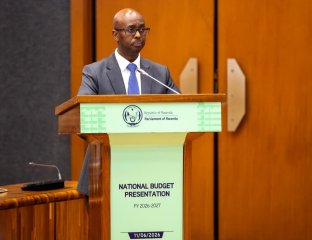
Rwanda has set its national budget for the 2026-27 fiscal year at 7.796 trillion Rwandan francs ($5.5 billion), (…)

The Capital Markets Youth Forum 2026 concluded Friday at the Kigali Convention Centre, bringing together students, (…)